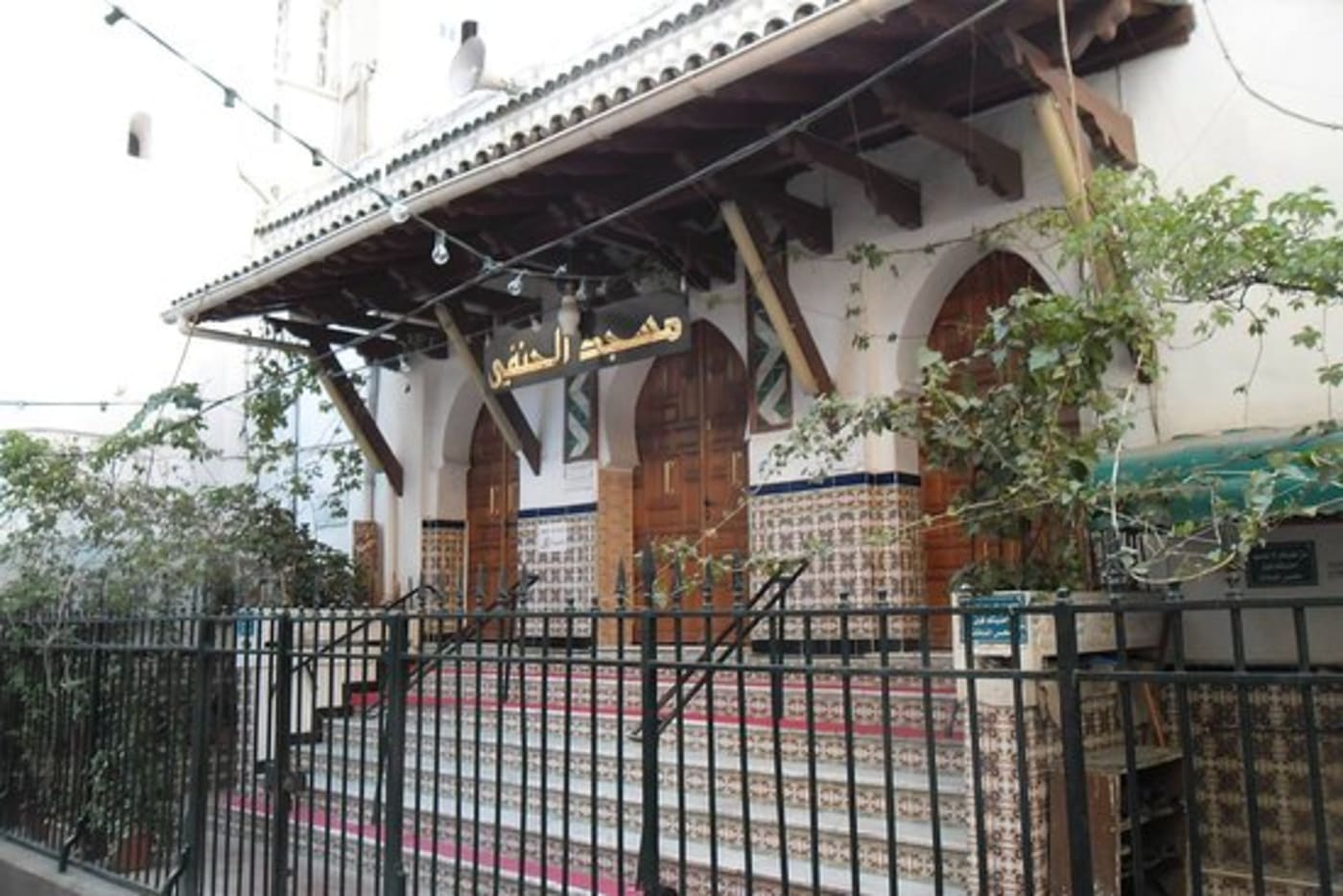
El Hanafai Mosque
El Hanafai Mosque is one of Blida's principal mosques, named after the Hanafi school of Islamic jurisprudence — the rite historically dominant in Ottoman Algeria.
1 January 2025
Overview
El Hanafai Mosque is one of Blida's principal mosques, taking its name from the Hanafi (حنفي) school of Islamic jurisprudence — the madhhab that was the official rite of the Ottoman Empire and therefore dominant in Ottoman Algeria. The presence of a Hanafi mosque in Blida is a direct legacy of Ottoman rule.
Ottoman Religious Heritage
Under Ottoman governance, the Hanafi rite was institutionalised across the empire's territories. In Algeria, this meant the construction of Hanafi mosques in major towns — Algiers, Blida, Constantine — alongside the indigenous Maliki mosques already in use by the local Berber and Arab population.
Blida's own founding mosque was built by order of Khair al-Din Barbarossa (Ottoman Regent of Algiers) — see the foundational narrative in the city's history.
Architecture
El Hanafai Mosque features the Ottoman-influenced minaret typology: a slender, pencil-shaped minaret distinct from the square Maghrebi minarets of the Maliki tradition. The prayer hall follows the Ottoman hypostyle plan.
Connections
- Ottoman founding context: [[archives/history/first-battle-of-blida|Blida's Ottoman era and the Barbarossa mosque]]
- Compare with the Maliki tradition: [[culture/religion/mosque-ibn-saadoun|Mosque of Ibn Saadoun]] — likely an older Maliki foundation
- The Hanafi / Maliki duality is part of Blida's layered religious landscape alongside the churches: [[culture/religion/saint-charles-church|Saint-Charles Church]], [[culture/religion/jules-ferry-church|Jules Ferry Church]]