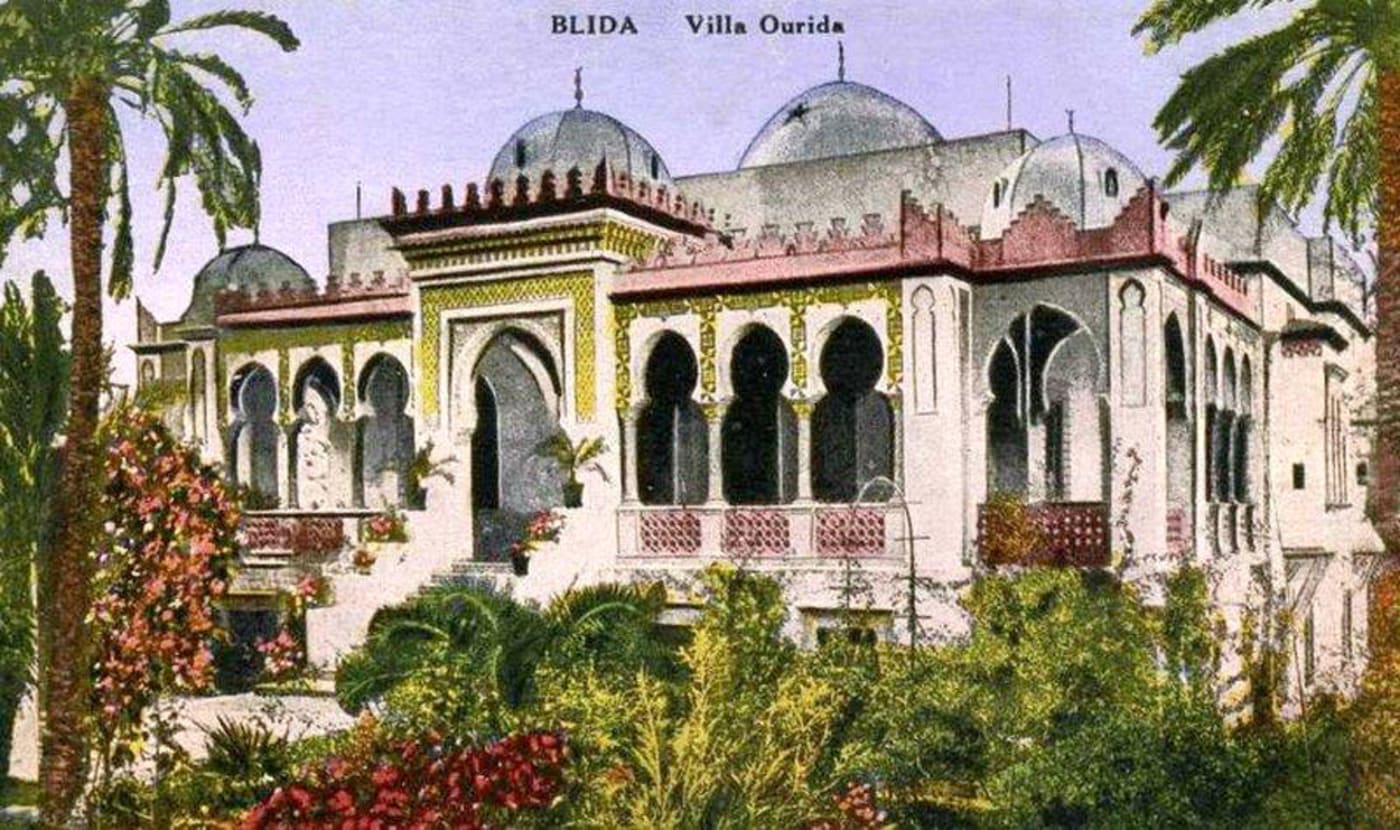
Villa Ourida
Villa Ourida is a historic colonial-era villa in Blida whose name — 'the little rose' — echoes the city's oldest poetic epithet, given by a visiting poet who called Blida 'El Ourida'.
1 January 2025
Overview
Villa Ourida is a colonial-era villa whose name carries deep symbolic resonance. Ourida (أُورِيدَة) means "the little rose" in Algerian Arabic — and according to tradition, this is the name a visiting poet gave to Blida itself upon seeing its rose gardens, a name that predates the French period and echoes through the city's identity as the City of Roses (La Cité des Roses / مدينة الورود).
Name and Symbolism
The name El Ourida is said to have been bestowed by a poet passing through Blida and marvelling at its rose cultivations, introduced by the city's founder Sidi Ahmed El Kebir. The villa's name thus connects colonial-era built heritage to the oldest layer of the city's identity.
See the founding narrative: [[archives/history/earthquake-1825|earthquake-era Blida]] and the city's foundation in [[vault/Home|Home — Origins of Blida]].
Architectural Character
Villa Ourida reflects the residential architecture of French colonial Blida: a European-style villa with a garden, likely featuring arcaded verandas, shuttered windows, and ornamental ironwork — the domestic language of pied-noir Algerian urbanism.
Connections
- The name ties to Blida's foundational identity: the rose gardens established by [[archives/history/first-battle-of-blida|Sidi Ahmed El Kebir's settlement (1533–1535)]]
- Compare colonial residential architecture with [[culture/architecture/villa-guglielmi|Villa Guglielmi Blida]]
- The cultural significance of roses to Blida: the annual Rose Festival and rose-based gastronomy
- [[culture/gastronomy/|Gastronomy]] — rose-based traditional recipes reflect the same founding identity