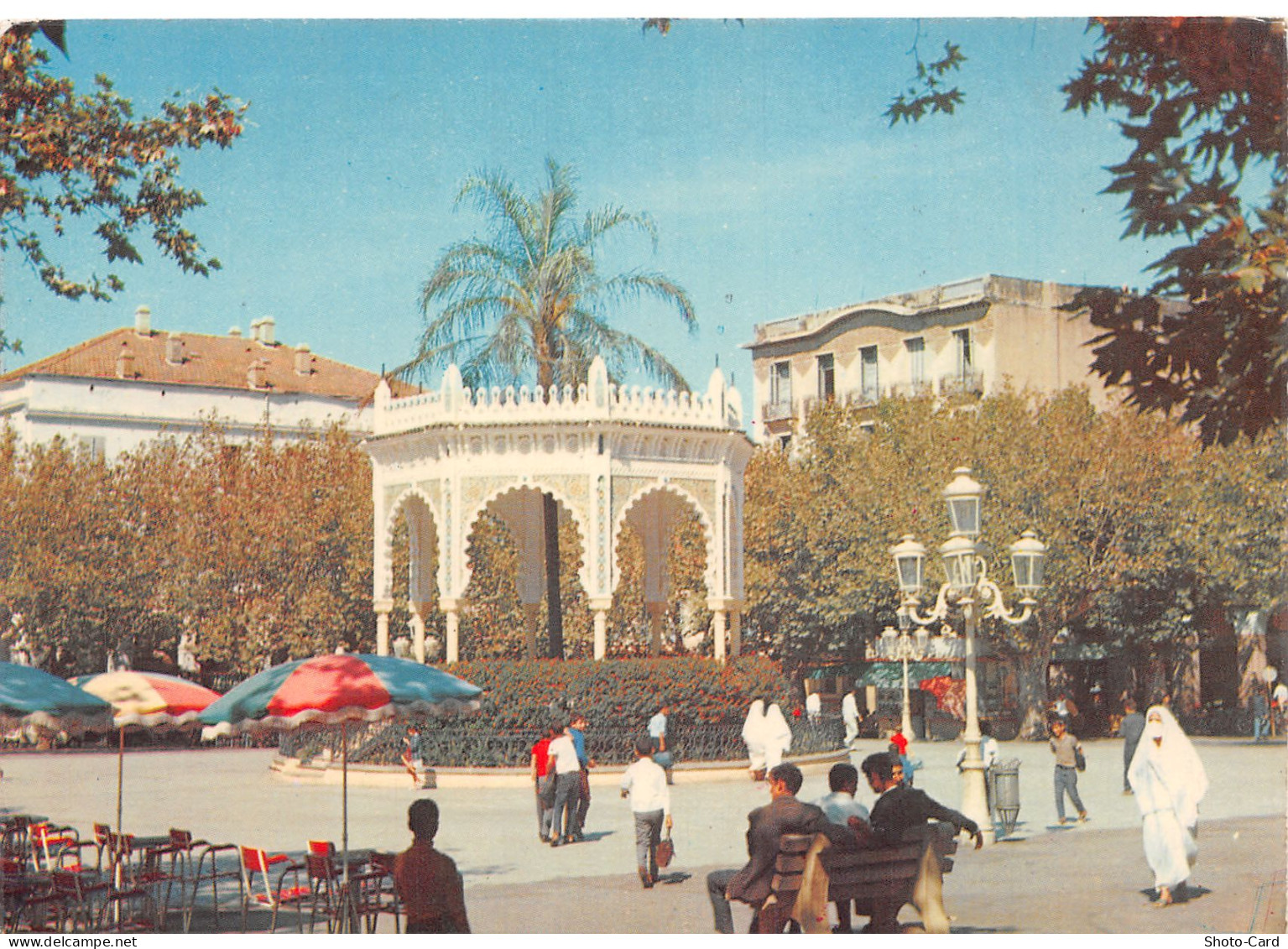
Music Kiosk of Blida
The ornate Music Kiosk (Kiosque à Musique) stands at the heart of Blida's central square — a symbol of the city's colonial Belle Époque urbanism and its deep musical culture.
1 January 2025
Overview
The Music Kiosk (Kiosque à Musique) is one of Blida's most recognisable landmarks. Located in the city's central square, the cast-iron and wrought-iron structure was built during the French colonial period as a venue for public concerts and municipal band performances — a common feature of French provincial town planning exported to colonial Algeria.
Architecture
The kiosk follows the classic Belle Époque design: a raised octagonal or circular platform sheltered by an ornate canopy of wrought iron with decorative motifs. Its open sides allowed music to project across the square while providing shade for performers. The structure survived the successive earthquake reconstructions of Blida and remains largely intact.
Cultural Significance
The kiosk is deeply embedded in Blida's identity as the City of Music. The city produced some of Algeria's most significant musical figures — masters of Andalusian classical music and Chaâbi — and public performance in the central square was part of the city's cultural rhythm:
- [[culture/people/Musician/dahmane-ben-achour|Dahmane Ben Achour]] — chaâbi master, born in Blida
- [[culture/people/Musician/abderrahmane-aziz|Abderrahmane Aziz]] — Andalusian and chaâbi singer
- [[culture/people/Musician/rabah-driassa|Rabah Driassa]] — violinist and musician
The four Andalusian music associations that continue this tradition — [[lifestyle/communities/Music Associations/el-motribia|El Motribia]], [[lifestyle/communities/Music Associations/el-djenadia|El Djenadia]], [[lifestyle/communities/Music Associations/el-widadia|El Widadia]], [[lifestyle/communities/Music Associations/nedjma|Nedjma]] — are the institutional heirs of the musical culture the kiosk once animated.
Connections
- [[culture/architecture/bazar-esserdouk|Bazar Esserdouk]] — another colonial-era commercial landmark nearby
- [[archives/history/earthquake-1825|Earthquake 1825]] — the urban reconstruction that created the square and kiosk's context
- [[culture/music/|Music section]] — Blida's broader musical heritage